

Meet our member
Who we are
Forum Syd is a Swedish democracy and rights organization with around 160 member organizations and thousands of partners worldwide. With a vision of ‘a just and sustainable world where all people have the power to effect change,’ we strive for fair and sustainable global development based on the equal value of all people, their right to reasonable life circumstances, and the sustainable use of the world’s natural resources. Forum Syd has been a LINGOs member since 2014.
What learning means to us
Learning is at the heart of what we do because we work towards global development by building the capacity of partner organizations and staff. Learning helps us achieve our objectives and helps our global partners effect change. We see learning as a way of sharing experiences, developing a community of practice and strengthening networks.
Forum Syd joined the LINGOs community for a more accessible, cost effective, efficient and environmentally friendly way of achieving our partners’ training needs. We see LINGOs as a valued partner that, like all our partnerships, creates space for dialogue and mutual learning that helps us realise our vision. Since becoming a LINGOs member, we have worked in civil society strengthening, social accountability and citizen participation issues in Africa, Latin America, the Balkans and Asia.
How we learn at Forum Syd
The annual LINGOs Forum (GLF) has been a great benchmarking platform where we learn from others as well as measure how well we are doing in the learning industry. The Office Hours and numerous webinars organized by LINGOs offer mentorship on how to improve our learning platform and answer our questions as we continue to learn about learning! Several colleagues have successfully completed the subsidized PMD Pro 1 course which is a powerful tool for designing, implementing, monitoring, managing and evaluating development programs. Most importantly, we use the eLearning courses to contribute to a stronger civil society and build staff capacity.
The difference learning has made
Learning has helped our partner organizations improve their project management skills and enhanced their understanding of rights-based programming, both of which have led to positive results.
Thomas Ebenezar, Managing Trustee at Intergrated Action Trust – India, is one of our partners who has recently benefited from online training:
“I really like the way the training is offered as it makes learning meaningful. The eLearning courses have been invaluable in enhancing my skills and experience in financial administration. I am now trained in internal controls, organizational structure, budgeting and planning, accounting and auditing. These are all very useful skills and when I put them into practice they will transform my organization’s financial administrative system.”
Another trainee, Abdiaziz Sudi a Project Officer from Somaliland Environment Volunteer Organisation said:
“The elearning courses in project management took my knowledge to a whole new level. Now I know which tools to use at different stages of the project cycle. I also learned to take a rights-based approach rather than a need-based one.”
Our future learning plans
Learning is essential in enabling NGOs to respond to the new and often unpredictable challenges that face them in a complex aid environment. In the next phase of our learning strategy, we plan to offer courses in partnership with our member organizations to leverage their areas of expertise and build more networks. We are also working towards building a wider multi-lingual learning community to cater for our partners across the various continents with a focus on Latin America.
Our advice to you
Learning advances people and organizations forward by giving them the skills they need to not only effectively perform their mandates but also create and share meaningful knowledge. Every organization should embrace and commit to mutual learning as a way of improving organizational effectiveness, enhancing the quality of their work, and strengthening their adaptability, innovation and sustainability. In doing so, learning should be defined, a proper needs assessment should be conducted and organizations should also develop tools to track, monitor and evaluate their capacity development efforts.
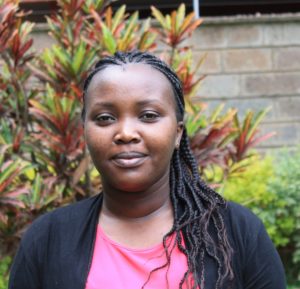
Clarice Gathura
eLearning Coordinator, Forum Syd